
Warning: Trying to access array offset on false in /home/agwebs18pt/public_html/zenlawyerseattle.com/wp-content/plugins/add-post-footer/add_post_footer.php on line 379
Warning: Trying to access array offset on false in /home/agwebs18pt/public_html/zenlawyerseattle.com/wp-content/plugins/add-post-footer/add_post_footer.php on line 401
Warning: Trying to access array offset on false in /home/agwebs18pt/public_html/zenlawyerseattle.com/wp-content/plugins/add-post-footer/add_post_footer.php on line 203
Warning: Trying to access array offset on false in /home/agwebs18pt/public_html/zenlawyerseattle.com/wp-content/plugins/add-post-footer/add_post_footer.php on line 405
 “Then where Should I start?”
“Start what, for Christ’s sake?”
“Researching the history of the area. Of Derry Township.”
‘”Oh. Well. Start with the Fricke and the Michaud. They’re supposed to be the best.”
“And after I read those-“
“Read them? Christ, no! Throw em in the wastebasket! That’s your first step. Then read Buddinger. Branson Buddinger was a damned sloppy researcher…but when it came to Derry his heart was in the right place. He got most of the facts wrong but he got them wrong with feeling.”
Stephen King, It (1986).
Although facts are important what matters to the jury is feeling. We must feel the case so the facts are felt. To relate to the jury with feeling we begin by discovering the story of our client. To do this we emotionally connect with what our client has gone through and how this feels. Once we accomplish this and accomplishing this takes immersion into our client’s life we arrive at the emotional level of the case.
This allows us to draw on our emotional experience and connect with the feelings of our client. When we feel with our client we have emotional honesty and convey this feeling to the jury. Through emotional connection we do this naturally without trying to sell the jury.We connect with the jury in a straight forward common sense manner, avoiding legalese and complexity.
The feeling of our client which we mirror flows into the courtroom. The jury relates to this feeling because it is honest and true to life. The facts become subservient to the feeling of the case. Our client has this feeling, we have this feeling and our feeling is given to the jury. When the jury accepts our feeling as its own the facts merge into our feeling.
Post Footer automatically generated by Add Post Footer Plugin for wordpress.
 Starting as a young lawyer and continuing I consult Professors Strunk and White,
  Eye contact leads to meaningful connection. Begin with an accepting and understanding heart,
  This is my take on how a trial lawyer is like a Pocock cedar racing shell. James Daniel Brown, In Boys In The Boat (Viking 2013), discusses George Pocock, a master shell builder in the 1920s and 30s. Brown writes about Pocock’s discovery of cedar as the ultimate wood for a racing shell; with the result being “the boat as a whole [is] under subtle but continual tension caused by the unreleased compression in the skin, something like a drawn bow waiting to be released.”
 Several years ago when reading
 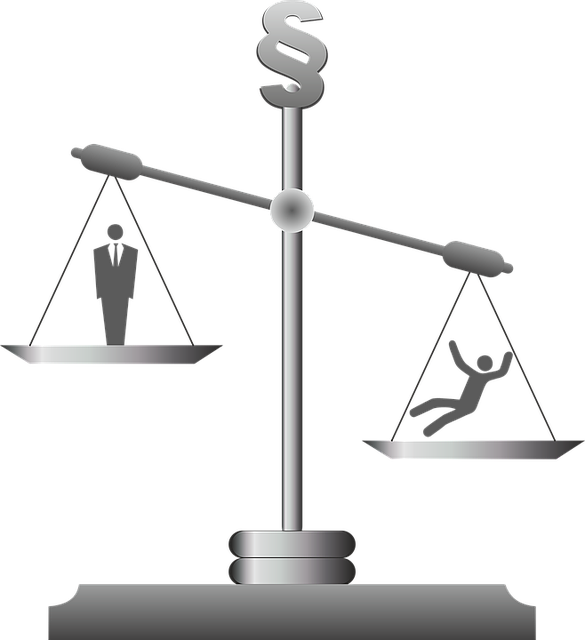 Just lost a “MIST” case. For those who do not know a “MIST” case is what we call an automobile collision case with little or no visible damage to the colliding cars and injuries to plaintiff that cannot be seen. Examples include injuries to soft tissue- thus,
  This post gives my take on Trial Lawyers College (TLC) where I attended and graduated in the class of July 2012: